
Why Eels Are Fascinating Creatures
May 6, 2025To begin, let us clarify three things. Firstly, Eels are in fact fish, not Sea snakes—which are fascinating reptiles in their own right—this is a scientific fact. And secondly, the following words are loosely based around scientific fact, but by no means a scientific article. Consider it an interpretive dance in and around the topic of these atypical and fascinating creatures, known collectively as eels. Something to whet the appetite, to hopefully learn a little more. It may even help you break the ice during an awkward silence at your next work bbq or other social gathering. "Hey did you know that Eels are fascinating creatures."
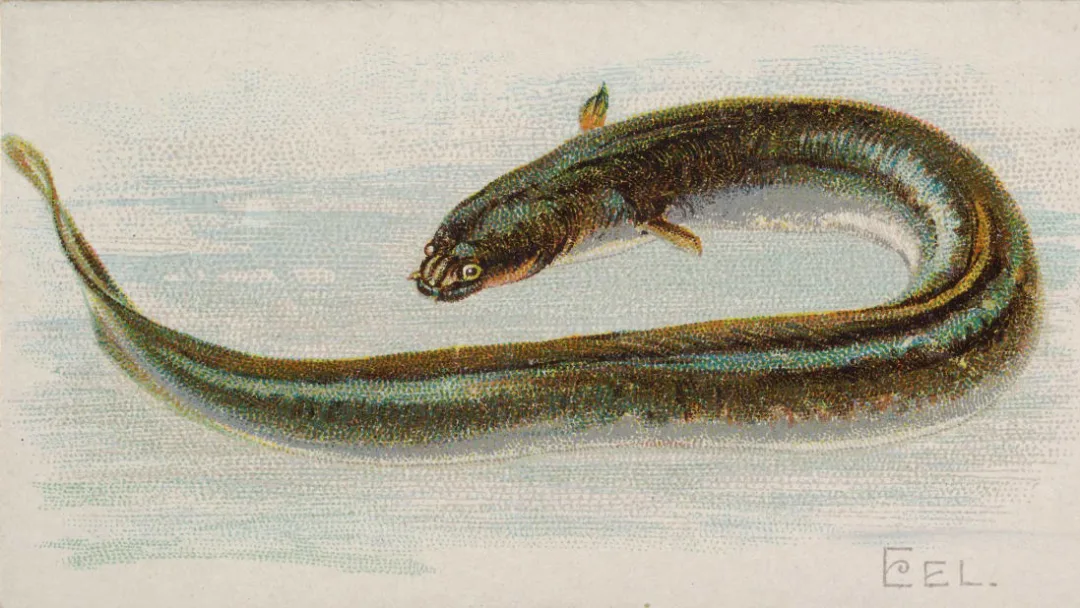
Important Critters
Slimy, elusive and a bit scary looking. These are often the first descriptors that come to mind when considering the eel, they often make us feel a little uneasy. But the Eel has been held in high regard by humans for millennia.
Eaten as a delicacy by the Romans, revered as semi-sacred by the Egyptians, mythologically, culturally and ecologically venerated by Māori; as well as mystifying thinkers from Aristotle to modern day scientists.
Mysterious Love-Making
Over 2300 years ago, one highly acclaimed Aristotle dissected some eels (perhaps just one) and could not find any gonads—no testes or ovaries—and concluded that eels did not reproduce sexually, but in fact emerged spontaneously from mud, slime or rotting vegetation. As one of the great-great grandfathers of science, we can forgive old Aristotle for this erroneous hypothesis. Not only because, well, this was rather a long time ago, but more significantly: still to this day, how exactly eels reproduce remains a scientific mystery.

Bermuda Triangle Love Fest
Sure, we know more now. Like that all eels begin their lives as larvae and then metamorphose (a various number of times actually, depending on the species). More on that later. The biggest breakthrough regarding Eel-love-making-knowledge came around the start of the 20th century when danish Marine biologist Ernst Johannes Schmidt conducted a number Eel-Larvae-Searching-Expeditions. After almost 20 years of searching, Ernie-Jo finally tracked them to their spawning ground of the Saragossa Sea, which just so happens to be the approximate location of the mythical Bermuda Triangle. Bound between Florida, Puerto Rico and Bermuda, this area of the North Atlantic played host to many plane and boat disappearances not to mention plenty of delectable urban legends and conspiracy theories. Coincidence, maybe… Interesting? Most definitely. Maybe all those planes and boats simply did not have tickets to the Bermuda Triangle Eel Love fest, or is it magnets? I digress.
Metamorphosis
During their lives, American and European eels go through various transformations.
- —Leptocephali: the larval stage, little leaf-shaped transparent beings that drift for about a year on currents from the Sargasso sea toward the coast of North America and Europe.
- —Glass Eels: as they reach the coast, they metamorphose into miniature eels that are still transparent.
- —Elvers: As the glass eels enter the fresh water, they begin to develop pigment and become elvers.
- —Yellow Eels: Once they find a home they become yellow eels, where they will live for most of their lives—anywhere from 5 to 20 years or more.
- —Silver Eels: Finally, when the urge to reproduce strikes, they undergo their final transformation into silver eels. Their eyes grow larger for better deep-sea vision, their digestive tracts wither away because they will never eat again, and their bodies become silver to blend in with the open ocean.
Massive Magnetic Metamorphosing Migrations
Not all of the 800+ different species of eel breed in the Saragossa sea, but both the North American and the European Eel are born—and in fact die—in the Bermuda Triangle. And this journey is one of epic proportions. Let's dive in.
After being born, these eels float in the ocean's salty currents for up to a year as larvae, seemingly drifting aimlessly thousands of kilometres. Once they are washed up near a continental shelf that works for them, their body changes over 6-12 months; they metamorphose into Glass Eels.
(Short side bar: can we all just take a moment to appreciate the word and concept of Metamorphosis? Lovely to say, lovely to think about.)
Anyway, at this point, the glass eels begin actual proper swimming—rather than floating—towards and then into the river mouth of their choice. Could be the Thames, could be the Mississippi River; we going fresh water baby, and after only a few weeks, metamorphosis (mmmm) number two begins. The juvenile Eels are now known as Elvers, and these little 5-10cm long badasses, swim up rivers and streams, sometimes thousands of kilometres in land. Often they even scurry short distances across land, to find that ideal eel habitat. Once a nice wee spot has been discovered, something with a slow current and some solid hiding places, our eels will have reached their next stage of metamorphosis; turning into Yellow Eels.
After about 5 to 25 years of being cryptic, elusive, nocturnal and mysterious, they transform a final (and forth) time, into Silver Eels. This marks the beginning of the last behemoth voyage for our Eels. As if an internal voice tells them to "return from whence you came", they swim tens, hundreds or thousands of kilometres down river (and sometimes scurry a few meters across land). Transitioning from fresh back to salt water is no problem for the silver veterans. And more astounding, navigating across the huge, deep dark expanse of the Atlantic Ocean back to the Saragossa sea, whether from North America or Europe, is also easy peasy lemon squeezy for our friends the eels.
How do they navigate? Well, some very smart and industrious scientists have proposed that these eels can sense the earths magnetic field, which is apparently called magnetoreception (there's your new word for the day). They are able to do this either: via tiny magnetic minerals in their cells, or through cryptochromes in their retinas, which are blue-light photoreceptors sensitive to magnetic-induced chemical reactions. Wait, what? This is getting way too scientific. Also, the jury is still out on this one. Could also have something to do with the Bermuda Triangle or Atlantis for all that we know.
Some Final Mind-Blowing-Mega-Facts
Alright, that was quite a lot to digest. And all about the North American and European Eel. So here some final tasty mega-fact-nuggets to bust out during you next awkward silence at a work function or kids birthday party.
- —Some New Zealand and Australian Eels, undergo a similar thousand kilometre journey to their Northern Hemisphere cousins. Their spawning ground is somewhere in the pacific islands, but no one knows exactly where.
- —Some New Zealand Longfin Eels have lived over 100 years.
- —Some elvers can swim up large waterfalls and even navigate through dams.
- —Not all eels migrate up rivers. The Conger Conger (yes, Conger Conger) is one of these marine eels. It can grow up to 3 meters long and weigh roughly 72 kg.
- —Electric Eels are not true eels. They are part of the knifefish family. They can still deliver shocks of up to 600 volts though.
Conclusion & Call To Action
Alright, that's enough for today. Hope you enjoyed and learned a thing or two. If you want to learn more, read "The Book of Eels" by Tom Fort, a far more detailed, accurate and eloquent narrative about our friends the Eels.
Oh and almost forgot: buy the long sleeve t-shirt with an awkward name but a sincere message below.
